-
Created by
 Michela Giusti, last updated on Jun 04, 2026
22 minute read
Michela Giusti, last updated on Jun 04, 2026
22 minute read
Contributors: B-Open and TCDF
Issued by: B-Open
Issued Date:
Ref: C3S3_430a – ECDE maintenance and development
Official reference number service contract: 2021/C3S2_430a_BOPEN
Acronyms
1. Introduction
1.1. Executive summary
This dataset provides a series of climate indicators derived from reanalysis and model simulations data hosted on the Copernicus Climate Data Store (CDS). These indicators describe how climate variability and change of essential climate variables can impact sectors such as health, agriculture, forestry, energy, tourism, or water and coastal management.
Those indicators are relevant for adaptation planning at the European and national level and their development was driven by the European Environment Agency (EEA) to address informational needs of climate change adaptation national initiatives across the EU and partner countries as expressed by user requirements and stakeholder consultation. The indicators cover the hazard categories introduced by the IPCC and the European Topic Centre on Climate Change Impacts, Vulnerability and Adaptation (ETC-CCA).
The indicators have either been calculated through a specific workflow using CDS dataset in input or directly retrieved From the CDS when already available. In this way both the calculations and the resulting data are fully traceable. As they come from different datasets the underlying climate data differ in their technical specification (type and number of climate and impact models involved, bias-corrected or not, periods covered etc.). An effort was made in the dataset selection to limit the heterogeneity of the underlying dataset as ideally the indicators should come from the same dataset with identical specifications.
The indicators related to temperature, precipitation and wind (20 out of 30) were calculated from atmospheric variables in the same datasets: 'Climate and energy indicators for Europe from 2005 to 2100 derived from climate projections', and 'ERA5 hourly data on single levels from 1940 to present'. The other indicators are directly available from CDS datasets generated by specific theme projects.
1.2. Scope of documentation
This document provides a description of the indicators included in the European Climate Data Explorer and details of the dataset and the methodology used to produce them. First, the product requirements (section 2.1) against which this dataset was developed is presented, followed by the definition of the indicators (2.2 product overview) and the input datasets (2.3 Input datasets) used to calculate them. Thereafter, the methodology (2.4 Method) to produce the indicators forming this catalogue entry is described.
1.3. Version history
This is the second version of the dataset. Section 3 Version changes provides the changes occurred for each indicator (if any) between v1.0 and v2.0.
2. Product description
2.1. Product requirements
The development of those indicators was driven by the European Environment Agency (EEA) to address informational needs of climate change adaptation national initiatives across the EU and partner countries as expressed by user requirements and stakeholder consultations. They are relevant for adaptation planning at the European and national level and cover the hazard categories introduced by the IPCC and the European Topic Centre on Climate Change Impacts, Vulnerability and Adaptation (ETC-CCA, [1]). They are made available interactively through public visualisation apps on the European Climate Data Explorer hosted on EEA’s Climate-adapt site.
2.2. Product overview
2.2.1. Data Description
Table 1: Overview of key characteristics of the ECDE indicators.
|
Data type |
Grid |
|
Projection |
Regular latitude-longitude grid |
|
Horizontal coverage |
Europe |
|
Horizontal resolution |
0.25° x 0.25° |
|
Vertical resolution |
Surface |
|
Vertical coverage |
Single level |
|
Temporal coverage |
1940-2100 |
|
Temporal resolution |
Monthly, seasonal and yearly |
|
File format |
NetCDF 4 |
|
Conventions |
Climate and Forecast (CF) Metadata Convention v1.6, Attribute Convention for Dataset Discovery (ACDD) v1.3 |
|
Available versions |
v1.0, v2.0 |
|
Update frequency |
Annual |
2.2.2. Climate indicator definition
Table 2: Definition of the ECDE indicators.
|
Main Variables |
||
|
Variable |
Units |
Description |
|
Heat and cold |
||
|
Mean temperature |
°C |
Air temperature at 2m above the surface, averaged over a month, season or year. |
|
Growing degree days |
°C day |
Cumulative daily degrees above a 5 °C daily mean 2m air temperature, summed over a month, season, or year. |
|
Heating degree days |
°C day |
Cumulative daily degrees below a 15.5 °C daily mean 2m air temperature, summed over a month, season, or year. |
|
Cooling degree days |
°C day |
Cumulative daily degrees above a 22 °C daily mean 2m air temperature, summed over a month, season, or year. |
|
Tropical nights |
day |
Number of days with daily minimum 2m air temperature above 20 °C in a month, season, or year. |
|
Hot days |
day |
Number of days with daily maximum 2m air temperature above 30 °C (alternative thresholds of 35 °C and 40 °C are also included). |
|
Warmest three-day period |
°C |
The highest daily mean 2m air temperature averaged over a three-day window over a year. |
|
Heatwave days |
day |
Annual count of climatological heatwave days. A climatological heatwave is a period of at least three consecutive days exceeding the 99th percentile of May–September daily maximum 2m air temperatures over 1991-2020. |
|
High UTCI days |
day |
Number of days with Universal Thermal Climate Index (UTCI) above 32 °C. UTCI is an equivalent temperature (°C) representing human physiological response to meteorological conditions, accounting for clothing adaptation to outdoor temperature. It is derived from four surface variables: 2m air temperature, relative humidity, wind speed, and mean radiant temperature. |
|
Frost days |
day |
Number of days with daily minimum 2m air temperature below 0 °C in a month, season, or year. |
|
Daily maximum temperature |
°C |
Highest daily maximum 2m air temperature in a month, season, or year (i.e., the warmest day). |
|
Daily minimum temperature |
°C |
Lowest daily minimum 2m air temperature in a month, season, or year (i.e., the coldest day). |
|
Growing season start |
1 |
First day of the year when the mean 2m air temperature consistently exceeds or equals a specific threshold of 5 °C over 5 consecutive days. |
|
Growing season end |
1 |
First day in the second half of the year when the daily mean 2m air temperature consistently falls below a specific threshold of 5 °C over 5 consecutive days. |
|
Growing season length |
day |
Number of days between the growing season start and growing season end. |
|
Wet and dry |
||
|
Total precipitation |
mm period-1 |
Total precipitation is the accumulated liquid and frozen water, comprising rain and snow, that falls to the Earth's surface. The cumulative sum over a month, season or year is provided. |
|
Maximum consecutive five-day precipitation |
mm 5-days-1 |
Largest 5-day precipitation total within a month, season, or year. |
|
Extreme precipitation total |
mm |
Cumulative daily precipitation exceeding the 95th percentile of daily precipitation over 1991-2020 summed over a month, season, or year. |
|
Frequency of extreme precipitations |
day |
Number of days in a month, season, or year with precipitation above the 95th percentile of daily precipitation over 1991-2020. |
|
Flood recurrence |
m3 s-1 |
Return values of annual maximum river discharge. Data are provided as the 2, 5, 10 and 50 year return period of annual daily maximum river discharge estimated using a Gumbel distribution. |
|
Mean river discharge |
m3 s-1 |
Mean daily river discharge averaged over a 30-year period. |
|
Aridity actual |
Dimensionless |
Yearly and monthly mean ratio of actual evapotranspiration to precipitation over a 30-year period. Actual evapotranspiration is modelled using only available water. |
|
Consecutive dry days |
day |
Longest period of consecutive days with daily precipitation below 1 mm in a month, season or year. |
|
Duration of meteorological droughts |
month |
Number of months in a year with anomalously low precipitation, based on the 3-month Standardised Precipitation Index (SPI-3) relative to the 1991–2020 reference period. |
|
Magnitude of meteorological droughts |
Dimensionless |
The cumulative severity of drought events in a year, based on the 3-month Standardised Precipitation Index (SPI-3) relative to the 1991-2020 reference period. A drought event starts when SPI-3 values fall below -1 for at least two consecutive months and ends when the index returns positive. The magnitude of the event is defined as the sum of SPI-3 absolute values in the months of the drought episodes. |
|
Mean soil moisture |
Dimensionless |
Total amount of water held in the pores between soil particles. It is generally measured and expressed in two primary ways. Here, it is defined as the monthly mean value of soil moisture in the root zone as the fraction of the field capacity volume over a 30 year period. |
|
Fire weather index |
Dimensionless |
A meteorologically based index used worldwide to estimate fire danger. Developed by the Canadian Forestry Service, it combines 2m air temperature, precipitation, relative humidity, and wind speed to estimate forest fire ignition and spread conditions. |
|
Days with high fire danger |
day |
Number of days with a Fire Weather Index (FWI) above 30 in a month, season, or year, per the European Forest Fire Information System (EFFIS) classification. |
|
Mean wind speed |
m s-1 |
Mean speed of the 10m wind averaged over a month, season or year. |
|
Extreme wind speed days |
day |
Number of days in a month, season, or year with 10m wind speed above the extreme threshold defined as the 98th percentile of surface wind speed over 1991-2020. |
|
Snow and ice |
||
|
Snowfall amount |
mm |
The cumulative snowfall precipitation during the Northern Hemisphere winter sports season (November to April). |
|
Coastal |
||
|
Relative sea level rise |
cm |
The annual mean sea level relative to the 1986-2005 reference period. |
|
Extreme sea level |
m |
Total water level for a 100-year return period, estimated over 30-year windows (1951–1980, 1985–2014, 2021–2050). |
| Health | ||
|
Tiger mosquito season length |
day |
Duration of Aedes albopictus presence in days. This is also known as the mosquito season. Outside of this period mosquitoes die off or go into diapause. |
|
Tiger mosquito suitability index |
Dimensionless |
Likelihood of favourable environmental conditions for Aedes albopictus presence from 0 unsuitable (no favourable conditions) to 100 (fully suitable). |
2.2.3. Input datasets by indicator
The table below provides the input dataset used to derive each indicator. Each single dataset is described in more detail in section 2.3. For conciseness and clarity we have used a consistent set of short names for the datasets in the table below and in section 2.3.
Table 3: List of the ECDE indicators input datasets.
|
Main Variables |
|
|
Variable |
Dataset |
|
Heat and cold |
|
|
Mean temperature |
|
|
Growing degree days |
|
|
Heating degree days |
|
|
Cooling degree days |
|
|
Tropical nights |
|
|
Hot days |
|
|
Warmest three-day period |
|
|
Heatwave days - Climatological |
|
|
High UTCI days |
|
|
Frost days |
|
|
Maximum temperature |
|
|
Minimum temperature |
|
|
Growing season start |
|
|
Growing season end |
|
|
Growing season length |
|
|
Wet and dry |
|
|
Total precipitation |
|
|
Maximum consecutive five-day precipitation |
|
|
Extreme precipitation total |
|
|
Frequency of extreme precipitation |
|
|
Flood recurrence |
|
|
Mean river discharge |
|
|
Aridity actual |
|
|
Consecutive dry days |
|
|
Duration of meteorological droughts |
|
|
Magnitude of meteorological droughts |
|
|
Mean soil moisture |
|
|
Fire weather index |
|
|
Days with high fire danger |
|
|
Mean wind speed |
|
|
Extreme wind speed days |
|
|
Snow and ice |
|
|
Snowfall amount |
|
|
Coastal |
|
|
Relative sea level rise |
|
|
Extreme sea level |
|
2.3. Input datasets
2.3.1. ERA5 and derived products.
The ERA5 reanalysis is regarded as a good proxy for observed atmospheric conditions and currently covers 01/01/1940 to near real time and is regularly extended as ERA5 data become available.
The historical values of the indicators were derived from hourly data from the ERA5 reanalysis (ERA5 single levels) whenever possible. This was the case for the indicators related to temperature, precipitation and wind (20 out of 30). For the remaining indicators, values over the historical period (either simulated or from reanalysis when available) were used directly.
The historical values of Days with high fire danger and Fire Weather indices are from the Fire danger indices historical data from the Copernicus Emergency Management Service dataset, that is based on the ERA5 reanalysis and updated in near real time. It is produced by the Copernicus Emergency Management Service (CEMS) for the Global ECMWF Fire Forecasting model (GEFF) and the European Forest Fire Information System (EFFIS). More technical specifications can be found in the dataset documentation.
2.3.2. SIS Energy
The simulated indicators related to temperature, precipitation and wind (20 out of 30) were calculated from daily atmospheric variables in the same climate projections dataset: Climate and energy indicators for Europe from 2005 to 2100 derived from climate projections. It is a set of bias-adjusted EURO-CORDEX projections composed of 9 GCM-RCM simulations at 0.25° x 0.25° spatial resolution, 3-hourly temporal resolution and cover emission scenarios RCP4.5 and RCP8.5. The 9 combinations of the 5 GCMs with the 5 RCMs is given in Table 1. More technical specifications can be found in the dataset documentation.
Table 4: The 9 GCM/RCM combinations of the Climate and energy indicators for Europe from 2005 to 2100 derived from climate projection dataset
|
Global Climate Model |
Regional Climate Model |
Ensemble member |
|
EC-EARTH |
HIRHAM5 |
r3i1p1 |
|
EC-EARTH |
RACMO22E |
r1i1p1 |
|
EC-EARTH |
RCA4 |
r12i1p1 |
|
HadGEM2-ES |
RACMO22E |
r1i1p1 |
|
HadGEM2-ES |
RCA4 |
r1i1p1 |
|
IPSL-CM5A-MR |
WRF381P |
r1i1p1 |
|
MPI-ESM-LR |
CCLM4-8-17 |
r1i1p1 |
|
MPI-ESM-LR |
RCA4 |
r1i1p1 |
|
NORESM1-M |
HIRHAM5 |
r1i1p1 |
2.3.3. ERA5 Heat
The High UTCI Day index data are from Thermal comfort indices derived from ERA5 reanalysis. As indicated, it is based on surface variables from the ERA5 reanalysis (ERA5 single levels) and inherits the same spatial (0.25° x 0.25°) and temporal resolution (hourly). There are no climate projections of UTCI at the moment. More technical details can be found in the dataset documentation.
2.3.4. SIS Operational Water Service
The Flood recurrence, Mean river discharge, Aridity actual, and Duration of Soil moisture Draughts index data are from the Hydrology-related climate impact indicators from 1970 to 2100 derived from bias adjusted European climate projections dataset. It is a set of 30-year statistics from two hydrological models forced by 8 bias-adjusted multi-model simulations from the EURO-CORDEX experiment. The hydrological models are from the Swedish Meteorological and Hydrological Institute (SMHI, E-HYPEgrid model) and Wageningen University (VIC-WIR Model). The hydrological simulations are either gridded (5km x 5km) or at catchment scale and cover scenarios RCP4.5 and RCP8.5. The 8 combinations of the 5 GCMs with the 5 RCMs is given in Table 1. More technical details about the hydrological models can be found in the dataset documentation and in the following Hydrological model specification.
Table 7: The 8 GCM/RCM combinations of the water related indicators dataset.
|
Global Climate Model |
Regional Climate Model |
|
EC-EARTH |
CCLM4-8-17 |
|
EC-EARTH |
RACMO22E |
|
EC-EARTH |
RCA4 |
|
HadGEM2-ES |
RCA4 |
|
HadGEM2-ES |
RACMO22E |
|
MPI-ESM-LR |
RCA4 |
|
MPI-ESM-LR |
REMO2009 |
|
MPI-ESM-LR |
REMO2009 |
2.3.5. SIS EU Tourism
The Days with high fire danger and Fire Weather index data are from the Fire danger indicators for Europe from 1970 to 2098 derived from climate projections dataset. It is a set of 6 bias-adjusted multi-model simulations from the EURO-CORDEX experiment. These simulations have a daily temporal resolution, a spatial resolution of 0.1° x 0.1° and cover scenarios RCP4.5 and RCP8.5. The 5 combinations of the 5 GCMs with 1 RCM is given in Table 1. More technical specifications can be found in the dataset documentation.
Table 8: The 5 GCM/RCM combinations of the Fire danger indicators dataset
|
Global Climate Model |
Regional Climate Model |
|
CNRM-CM5 |
RCA4 |
|
EC-EARTH |
RCA4 |
|
HadGEM2-ES |
RCA4 |
|
IPSL-CM5A-M |
RCA4 |
|
MPI-ESM-LR |
RCA4 |
Note: The Fire Weather Index values were bias-corrected in this project to be compatible with the CEMS reanalysis FWI. See subsection 2.4.2 Indicator calculation.
The Snowfall amount indicator data (both historical and simulated) are from the Mountain tourism meteorological and snow indicators for Europe from 1950 to 2100 derived from reanalysis and climate projections dataset. The dataset is based on the UERRA reanalysis and a set of 9 bias-adjusted multi-model simulations from the EURO-CORDEX experiment. The indicator data simulations have an annual temporal resolution, a spatial resolution over NUTS3 regions, a vertical resolution of 100m and cover scenarios RCP4.5 and RCP8.5. More technical specifications can be found in the dataset documentation.
Table 9: The 9 GCM/RCM combinations of the snow indicators dataset.
|
Global Climate Model |
Regional Climate Model |
|
CNRM-CM5 |
RCA4 |
|
CNRM-CM5 |
ALADIN53 |
|
EC-EARTH |
RCA4 |
|
HadGEM2-ES |
RCA4 |
|
IPSL-CM5A-M |
RCA4 |
|
IPSL-CM5A-M |
WRF331F |
|
MPI-ESM-LR |
RCA4 |
|
MPI-ESM-LR |
REMO2009 |
|
MPI-ESM-LR |
RCA4 |
2.3.6. SIS European Storm Surges
The Relative sea level rise and the Extreme sea level data are from the Global sea level change time series from 1950 to 2050 derived from reanalysis and high resolution CMIP6 climate projections dataset. It is based on a set of simulations produced with the Global Tide and Surge Model (GTSM) of Deltares, a global 2D hydrodynamic model which incorporates tides, surges and mean sea-levels dynamically. Both the historical and future GTSM simulations include sea level rise data as input that are also available in the dataset. The Relative sea level rise field is annual and spatially-varying at 1° x 1° resolution and is relative to the 1986-2005 reference period based on RCP8.5 (not SSPs as for the GTSM simulations). The field is the median result of a probabilistic model that computes and combines processes affecting sea level. As such, it is model independent and only one field (the median) of SLR is provided in the dataset. More technical specifications can be found in the dataset documentation.
2.4. Method
2.4.1. Input dataset selection
The indicators are either retrieved from datasets when available or calculated through a specific workflow. In this way both the calculations and the resulting data are fully traceable. As they come from different datasets the underlying climate data differ in their technical specifications (type and number of climate and impact models involved, bias-corrected or not, periods covered etc.). An effort was made in the dataset selection to limit the heterogeneity of the underlying dataset as ideally the indicators should come from the same dataset with identical specifications.
2.4.2. Indicator calculation
The indicators were calculated according to the recommended definitions based on a technical paper from the European Topic Centre on Climate Change Impacts, Vulnerability and Adaptation (ETC/CCA). The indicators are either retrieved from datasets when available or calculated through a specific workflow. In this way both the calculations and the resulting data are fully traceable.
One exception is the Fire Weather Index (FWI) data of the SIS Tourism dataset. A bias was found between the original values and the values based on reanalysis (CAMS) and it was decided to apply a bias-correction procedure to correct the mean and the variance of the simulated FWI with the mean and variance of the reanalysis based FWI and taking the 1991-2020 period as reference (see Appendix 1).
2.4.3. Regional aggregation
Where relevant the indicators have been aggregated over standard administrative bounderies used by european institution for reporting. The aggregation was performed using the eartjkit aggregation tools. The administrative boundaries available are:
- the NUTS classification (Nomenclature of territorial units for statistics) maintained by Eurostat (see Eurostat (2021) website). NUTS is a hierarchical system for dividing up the economic territory of the EU and the UK. The indicators uses NUTS regions ranging from NUTS0 (country) to NUTS2 (sub-country) and NUTS3 in the specific case of Snowfall amount.
- Europe zones is the number of countries considered for the European domain (27 EU countries, 32 EEA member countries and 38 EEA member and cooperating countries).
- Transnational regions regions involve cooperating regions from several countries of the EU forming bigger areas (e.g. danube, alpine, ionian etc.) to promote better cooperation and regional development within the Union
Appendix 2 lists all the available regional layers.
2.4.4. Limitations
The EEA ECDE initiative gathers in a single dataset a number of indicators that are relevant for adaptation planning at the European and national level. Ideally the indicators should come from the same dataset with identical specifications, as this was not possible considering the available datasets hosted on the CDS an effort was made in the dataset selection to limit the heterogeneity of the underlying dataset. Out of the 30 ECDE indicators in this catalogue entry, 19 of them use the same input dataset (SIS Energy and ERA5 Single level, see Table 3) and provide a consistent core of indicators. The other indicators required the use of different datasets because they require more sector specific data (fire, hydrology, tourism) and are therefore not directly comparable. In particular, differences in future behaviour (trends, variability, etc..) between indicators using different input datasets can be, at least partially, attributed to the underlying climate projection included in each dataset. Besides the possible heterogeneity between indicators it is advised to consult the Product User Guide of individual indicators to understand their own limitations.
2.4.5. Validation and quality assurance
The strategy behind the calculation of the ECDE indicators is to use Quality Assured and validated datasets distributed through the CDS and use fully traceable and repeatable workflows to perform the computation. All the datasets used in input and listed in 2.2.3. Input Datasets by Index have gone through the CDS quality assurance and are under C3S governance and scrutiny should any error be found in the future. This strategy eliminates the uncertainties or errors due to the input data or tools used.
The workflows to calculate the indicators and their documentation could be subject to errors and to minimise them the quality assurance procedure described below has been followed. This process included several reviews by different responsible at various steps during the computation and publication of the indicators.
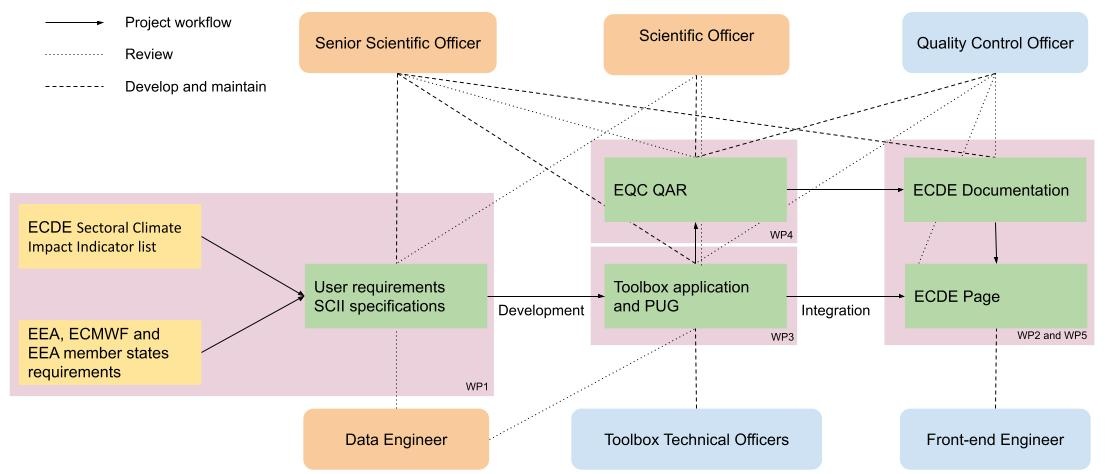
Figure 1: ECDE internal quality assurance and review process
Regarding the validation of specific indicators the validation has mainly been performed by comparing the output with either the already existing indicators available on the ECDE or other publication from the EEA where the same indicators were presented and computed different input data. Even though it was not necessarily possible to check against a numerically identical dataset it was possible to check that the indicators are consistent with other publications.
3. Version changes
The main updates of each catalogue version are listed in the table below.
Table 10: Catalogue entry overall change log
| Version | Change log |
|---|---|
| v1.0 |
|
| v2.0 |
|
The table below provides all the indicator specific changes between v1.0 and v2.0.
Table 11: List of the ECDE indicators and their changes
|
Main Variables |
||
|
Variable |
v1.0 |
v2.0 |
|
Heat and cold |
||
|
Mean temperature |
First release |
No change |
|
Growing degree days |
First release |
No change |
|
Heating degree days |
First release |
No change |
|
Cooling degree days |
First release |
No change |
|
Tropical nights |
First release |
No change |
|
Hot days |
First release |
No change |
|
Warmest three-day period |
First release |
Changed to a centred rolling window - insignificant change |
|
Heatwave days - Climatological |
First release |
Change percentile reference period to 1991 - 2020 |
|
High UTCI days |
First release |
Switch from 1.0 to 1.1 version of CDS data input dataset |
|
Frost days |
First release |
No change |
|
Maximum temperature |
First release |
No change |
|
Minimum temperature |
First release |
No change |
|
Growing season start |
Absent |
First release |
|
Growing season end |
Absent |
First release |
|
Growing season length |
Absent |
First release |
|
Wet and dry |
||
|
Total precipitation |
First release |
No change |
|
Maximum consecutive five-day precipitation |
First release |
No change |
|
Extreme precipitation total |
First release |
Change percentile reference period to 1991 - 2020 |
|
Frequency of extreme precipitation |
First release |
Change percentile reference period to 1991 - 2020 |
|
Flood recurrence |
First release |
No change |
|
Mean river discharge |
First release |
No change |
|
Aridity actual |
First release |
No change |
|
Consecutive dry days |
First release |
No change |
|
Duration of meteorological droughts |
First release |
Change percentile reference period to 1991 - 2020 |
|
Magnitude of meteorological droughts |
First release |
Change percentile reference period to 1991 - 2020 |
|
Mean soil moisture |
First release |
No change |
|
Fire weather index |
First release |
Switch from 4.0 to 4.1 version of CEMS data input dataset and update bias correction |
|
Days with high fire danger |
First release |
No change |
|
Mean wind speed |
First release |
No change |
|
Extreme wind speed days |
First release |
Change percentile reference period to 1991 - 2020 |
|
Snow and ice |
||
|
Snowfall amount |
First release |
No change |
|
Coastal |
||
|
Relative sea level rise |
First release |
No change |
|
Extreme sea level |
First release |
No change |
| Health | ||
|
Tiger mosquito season length |
Absent |
First release |
|
Tiger mosquito suitability index |
Absent |
First release |
Known issue:
In the original v1.0 release the variables Flood Recurrence and Mean River Discharge were distributed in their original grid (Lambert azimuthal equal area grid). At publication of v2.0 the regular grid version of the variables was preferred as it is more user friendly and consistent with all the other variables. So the current v1.0 data for variables Flood Recurrence and Mean River Discharge does not correspond to the original v1.0 which was published in its non regular grid. Users wishing to download the data in the original grid version can do from the CDS catalogue entry for hydrology-related climate impact indicators from which the indicators are derived.
4. Concluding remarks
The ECDE indicators dataset provides a series of climate indicators derived from reanalysis and model simulations data hosted on the CDS. It gathers data both in a gridded format and as regional averages that are used to make the indicators available through interactive visualisation apps on the European Climate Data Explorer hosted on EEA’s Climate-adapt site. It is provided as a dataset to support further analysis by climate change adaptation practitioners that wish to have access to the underlying data of the ECDE.
5. Appendix 1: Fire weather index bias correction
Several ECDE plots of the indicators include the comparison of the simulated and reanalysis based values. In the case of the Fire Weather Index (FWI), the simulated values over the historical period show a systematic bias against reanalysis based values making the comparison non-realistic to the user. To be able to facilitate the comparison, the simulated values were adjusted with a simple approach consisting in correcting the mean and scaling the variance of the simulated time-series as a the implementation of a state-of the art bias-adjustment method goes beyond the scope of this project. This document describes the specifications of the simple bias-correction method that was implemented.
5.1. Simple bias correction: mean and variance adjustment
The computing steps of the simple adjustment approach can be divided in three main categories:
5.1.1. Pre-processing: converting FWI to DSR
Because the FWI is not suitable for averaging over space or time [2], a nonlinear transformation into the Daily Severity Rating (DSR) is necessary (DSR = 0.0272 FWI1.77). The DSR is intended to be directly proportional to the expected effort required for fire suppression and control and is suitable for space or time averaging. As a consequence, the FWI daily values are first converted to DSR to which the simple bias-correction procedure is applied and then DRS values are converted back to FWI.
- Step 1: FWI to DSR conversion
5.1.2. Mean and variance calculation
The second series of steps consists in calculation the necessary parameters for each time-series over the reference period for all simulations. The reference period was set to 1981-2010.
- Step 2: Compute the average of each calendar month (climatology) of the model time-series over the reference period.
- Step 3: Compute the standard deviation of each month of the model time-series over the reference period.
- Step 4: Compute average of each calendar month (climatology) of the reanalysis time-series over the reference period.
- Step 5: Compute the standard deviation of each calendar month the reanalysis time-series over the reference period.
5.1.3. Processing
The third series of steps is to perform the adjustment with the previously calculated variables at each grid point. The processing is applied for each calendar month separately.
- Step 5: Compute the daily 30 year running mean.
- Step 6: Detrend the time series by subtracting the 30 year daily running mean from the daily projected values.
- Step 7: Adjust the variability of the previously detrended time-series by the standard deviation ratio (reanalysis value divided by the model value). For a model standard deviation below 0.1 (corresponding to an FWI close to 0) the ratio is set to 1 to avoid diverging values.
- Step 8: Retrend the time-series by adding the 30 year running mean to the variance adjusted values.
- Step 9: Compute the anomaly between the re-trended values and the projections monthly climatology.
- Step 10: Sum the anomalies to the reanalysis climatology to obtain the bias corrected values
In the ECDE the bias corrected DSR is saved as an ancillary variable after step 10.
5.1.4. Post-Processing
The the mathematical operations performed for the detrending and retrending can introduce negative DSR values. These possible negative values are invalid as the DSR must be positive, in particular to be converted to FWI. The negative values are simply set to zero to remain in the validity range of the DSR. To prevent loosing the information on where negative values are present, the correction is applied downstream in the ECDE workflows where the bias-corrected DSR is used.
- Step 11: Set the negative values to 0.
Finally convert the adjusted DSR values back to FWI values
- Step12: DSR to FWI conversion
5.2. Limitations
The simple bias-correction approach, although it reduces the systematic bias, has inherent limitation du to the simplicity of the approach. Figure 1 illustrates a favorable case where the simple approach reduces the bias and brings the corrected time series in better agreement with the reanalysis. Figure 2 shows a case where the simple approach is not capable to correct the model values that are relatively high (0-60) compared to the reanalysis values that are relative low (0-20) with significant differences in interannual variability. It also illustrates a case where this simple adjustment method introduces negative values that can't be left unchanged and are set to zero when used in further calculations.

Figure 2: Time series illustrating the bias-reduction of the between model simulations and observations (reanalysis). "Raw DSR reanalysis" are the observed values, "Raw DSR projections" are the original model values, DSR-bc is the corrected model values, and DSR-bc-zero is the later with negative values set to zero.

Figure 3: Same as figure 2 but for an unfavourable case where the bias-corrected values are not efficiently corrected. Note the presence of significant negative values in the DSR-bc values.
6. Appendix 2: Regional layers
The table below lists all the regional layers available and the corresponding code to use in the file naming conventions.
|
Regions |
Region |
Code |
|
NUTS |
NUTS 0 |
nuts_0 |
|
NUTS 1 |
nuts_1 |
|
|
NUTS 2 |
nuts_2 |
|
|
NUTS 3 |
nuts_3 |
|
|
Non NUTS |
Non NUTS |
non_nuts |
|
Europe Zones
|
EEA EU 27 |
eea_eu_27 |
|
EEA EU 32 |
eea_eu_32 |
|
|
EEA EU 38 |
eea_eu_38 |
|
|
Transnational Regions
|
Interreg VI-B Adriatic-Ionian |
eea_trans_adriatic_ionian |
|
Interreg VI-B Alpine Space |
eea_trans_alpine_space |
|
|
Interreg VI-B Northern Periphery and Arctic |
eea_trans_northern_periphery_and_arctic |
|
|
Interreg VI-B Atlantic Area |
eea_trans_atlantic_area |
|
|
Interreg VI-B Baltic Sea Region |
eea_trans_baltic_sea_region2 |
|
|
Interreg VI-B Central Europe |
eea_trans_central_europe |
|
|
Interreg VI-B Danube |
eea_trans_danube |
|
|
Interreg VI-B Mediterranean (EURO MED) |
eea_trans_mediterranean |
|
|
Interreg VI-B North Sea |
eea_trans_north_sea |
|
|
Interreg VI-B North West Europe |
eea_trans_north_west_europe |
|
|
Interreg VI-B South West Europe (SUDOE) |
eea_trans_south_west_europe |
7. References
[1] Crespi A., Terzi S., Cocuccioni S., Zebisch M., Berckmans J., Füssel H-M (2020) “Climate-related hazard indices for Europe”. European Topic Centre on Climate Change impacts, Vulnerability and Adaptation (ETC/CCA) Technical Paper 2020/1. DOI: https://doi.org/10.25424/cmcc/climate_related_hazard_indices_europe_2020
[2] Van Wagner, C.E., 1987. Development and structure of the Canadian Forest Fire Weather Index System, Forestry Technical Report (CFS - Ottawa). Canadian Forestry Service, Headquarters, Ottawa. http://cfs.nrcan.gc.ca/publications?id=19927.

